Company Research
The Metal Behind America’s Military, Aerospace, and Drone Dominance
The U.S. imports 91% of its titanium - a critical material in aerospace and drone production. Saga Metals’ Radar Project is one of the few North American discoveries aiming to close that gap.

Over the past few months, it’s become clear: Modern warfare is evolving fast.
Air superiority is no longer defined by fighter jets alone. Drones - agile, autonomous, and rapidly deployed - are now essential to both battlefield operations and national defense strategy.
Behind these machines is one of the most strategically significant materials in the world: titanium.
Lightweight, corrosion-resistant, and nearly as strong as steel, titanium is a cornerstone of the defense sector. It forms 45% of the F-35 Raptor’s airframe and is increasingly indispensable to the next generation of unmanned systems, from surveillance drones to hypersonic missiles.
As U.S. defense spending surpasses $1 trillion, with billions allocated to aerospace and drone initiatives, the next critical mineral spotlight is squarely on titanium.
But it’s not just the military driving demand. Titanium’s strength-to-weight ratio, heat tolerance, and biocompatibility make it essential across a broad range of industries: commercial aerospace, medical implants, chemical processing, and industrial manufacturing.
It’s even a key ingredient in everyday consumer goods like toothpaste and paint.
According to Grand View Research, the global titanium market is projected to reach $52.8 billion by 2029, growing at a 6.2% CAGR.
Yet despite this rising demand, the U.S. remains heavily dependent on foreign sources, primarily China, Russia, and Kazakhstan, for 91% of its titanium supply.
In an era of supply chain instability and geopolitical risk, that reliance has become a concerning vulnerability.
Reshoring critical minerals has become a top priority for policymakers - and Saga Metals (OTCQB: SAGMF, TSX-V: SAGA) is positioning itself to be part of the solution.
The company is advancing what could be one of North America’s most significant new sources of titanium, the Radar Project in Labrador, Canada.
New Discovery In A Proven Critical Mineral Corridor
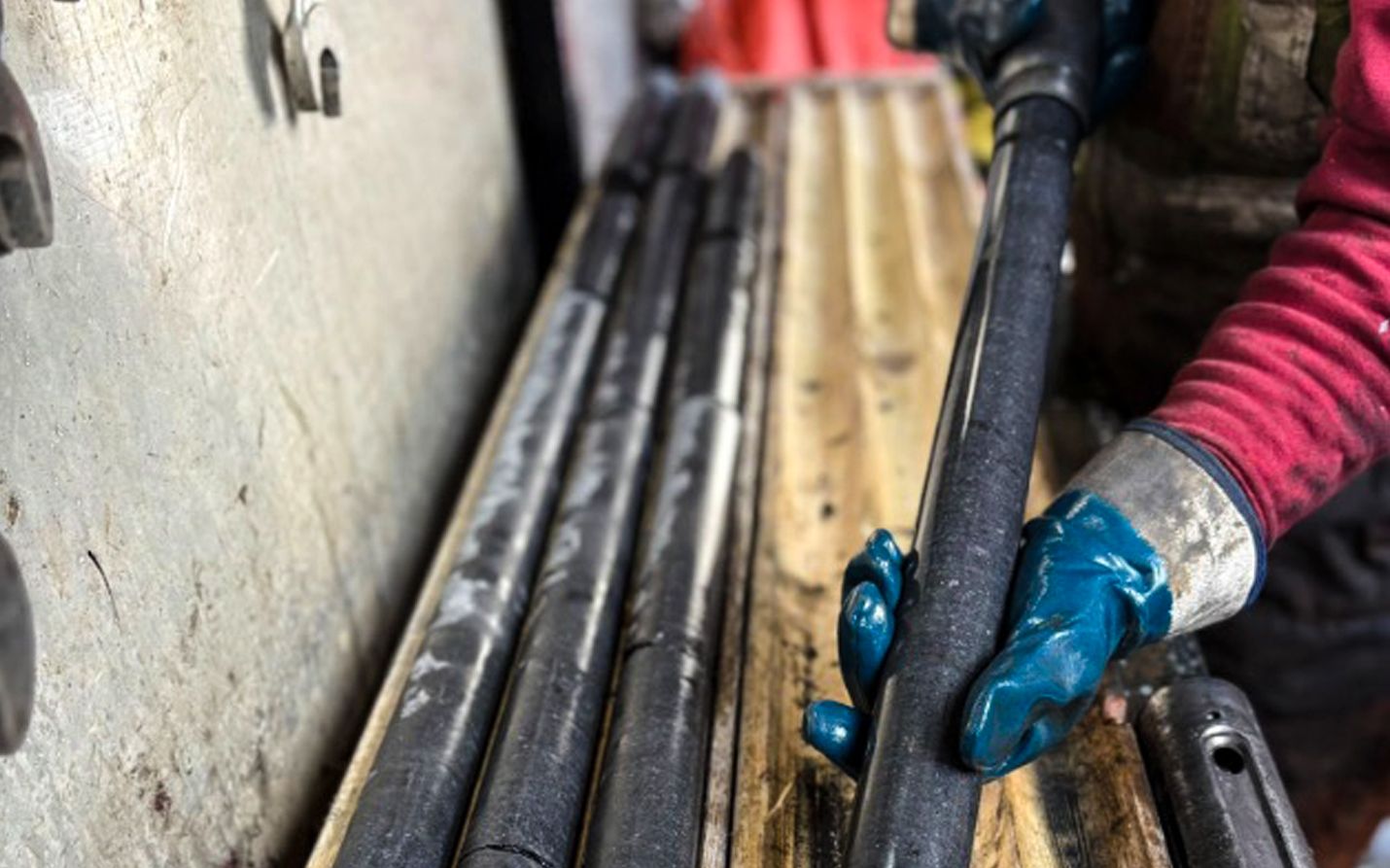
Just 10 km from the town of Cartwright, the 100%-owned Radar Project spans a massive 24,175 hectares.
Thee proximity to a coastal town with nearby hydroelectric power, a port, an airstrip, and a skilled local workforce, offers Radar a rare advantage.
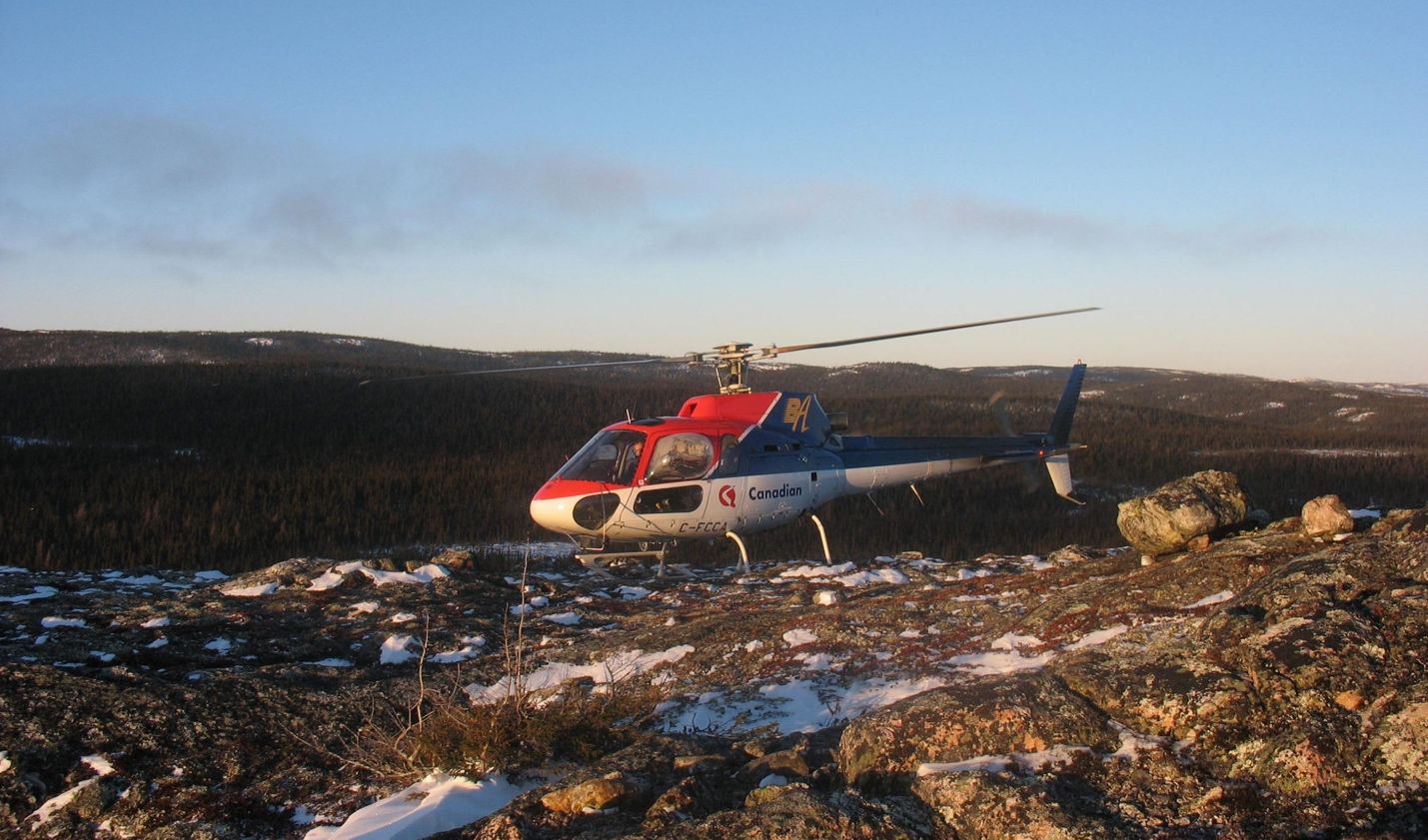
Unlike many critical mineral projects in remote terrain, Radar is fully road-accessible year-round, eliminating the need for expensive helicopter transport and dramatically reducing exploration costs.
Early drilling, surface sampling, and geophysical data suggest that Radar could emerge as a globally significant VTM deposit.
The presence of a VTM system is a strong indicator of potential for integrated, multi-metal production - including titanium, vanadium, and iron - all from a single, concentrated ore body.
This can dramatically improve project economics and make downstream processing more efficient and scalable.
Saga’s technical team draws direct comparisons to China’s Panzhihua deposit, the largest VTM operation in the world and source of over 40% of global vanadium production.
Like Panzhihua, Radar displays stratiform oxide layering, thick mineralized sequences, and coarse-grained titanomagnetite suitable for the production of high-grade titanium dioxide and vanadium pentoxide.
But those early indicators were just the beginning.
What Saga Metals (OTCQB: SAGMF, TSX-V: SAGA) discovered during the 2025 field season would firmly establish Radar as one of the most exciting VTM exploration stories in North America.
Magnetometer Readings Maxed Out the Machine
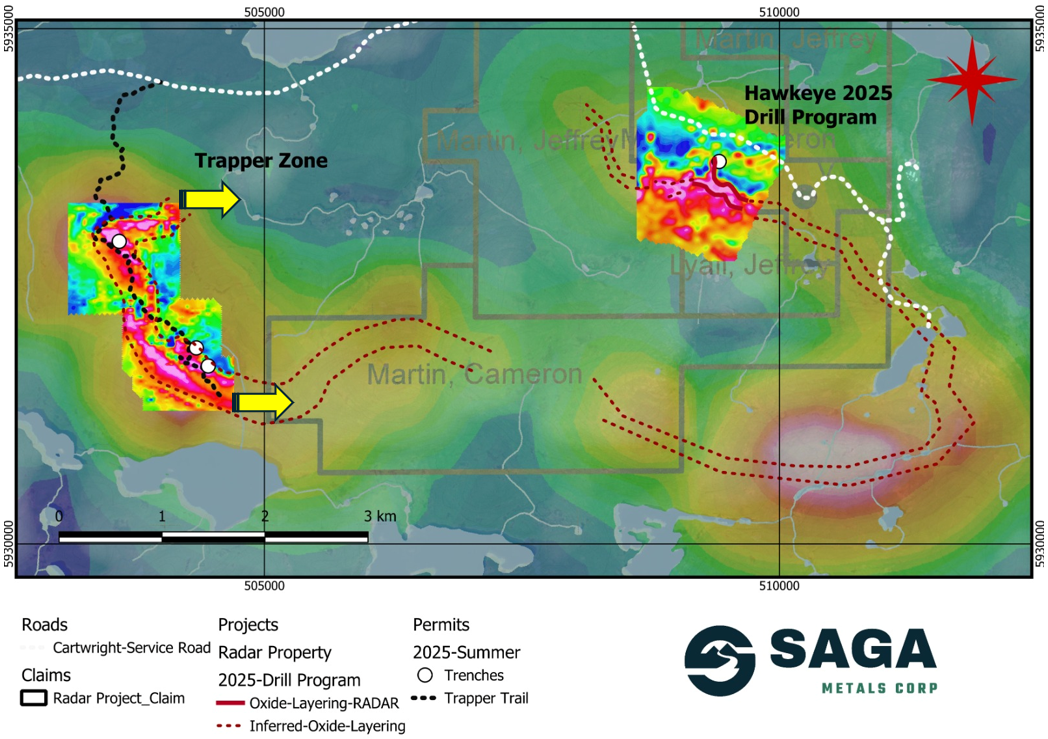
Saga’s 2025 geophysical program put Radar on the map.
In the Trapper zone, a priority target on the property, magnetometer readings exceeded 115,000 nanoteslas, pushing past the upper limit of the equipment’s detection range.
Readings this intense are typically associated with dense, high-grade magnetite-rich systems - exactly what Saga hoped to find.
The results were so strong they forced a full recalibration of Saga’s instruments.
Work to date has outlined a 20+ kilometer trend of titanium-vanadium-bearing rock, with early drilling showing thick oxide zones up to 400 meters, rivalling some of the best titanium systems in the world.
Saga has since kicked off a drill campaign at the Trapper Zone, targeting a continuous 3.3 km magnetic oxide layering trend.
Nearly 20,000 meters of drilling across 31 holes has been completed to date, with the program systematically testing key cross sections in Trapper North and Trapper South.
The goal? To gather the data needed for a maiden mineral resource estimate in the second half of 2026.
100% Drilling Success Across Trapper North and South
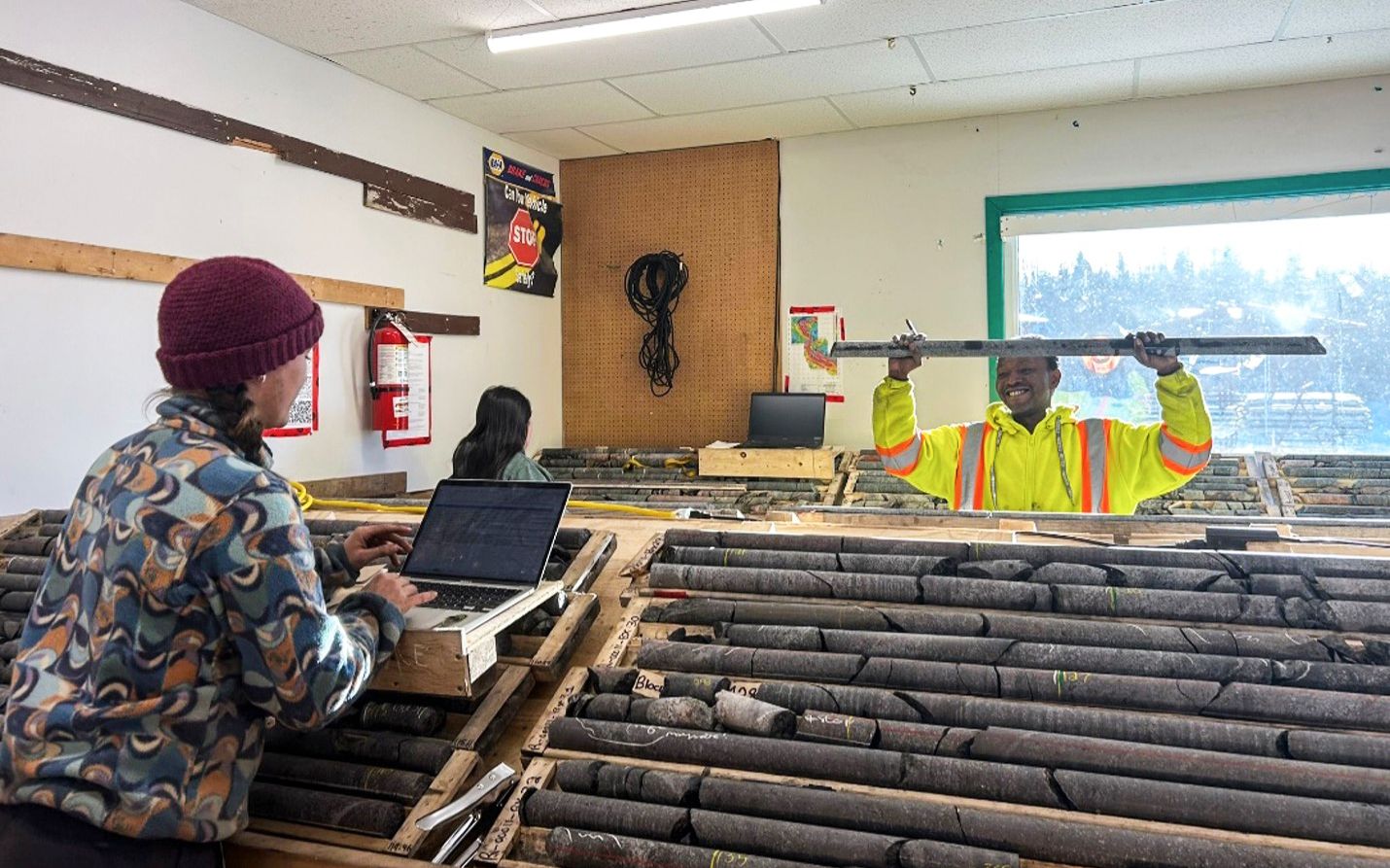
The first holes at Trapper North have been especially striking, containing between 35% - 90% oxide content:
- Hole R-0008 hit 67 meters of continuous, magnetite-rich oxide rock within a 270+ meter hole.
- Step-out hole R-0009, drilled 100 meters away on the same section, not only confirmed the same unit but extended it by another 165 meters, with even stronger magnetite content.
- Hole R-0010 helped refine the shape and orientation of the mineralized layers, improving Saga’s 3D model of the system.
- Hole R-0011, drilled as a 100-meter step-out from the earlier holes, adding new strike length to the semi-massive to massive oxide zone defined in the first cross section.
Put simply, the Radar project is showing continuity, exactly what you want to see when working toward a resource estimate.
With Trapper North confirming the system, the drill program shifted south to test additional magnetic anomalies.
All four drill holes at Trapper South showed promising grades as well.
- Hole R-0016 intersected more than 50 meters of mineralization, returning strong titanium and vanadium grades alongside iron content exceeding 52%.
- Hole R-0017 intercepted an even thicker 90-meter oxide zone, confirming the presence of broad, continuous oxide layers within the system.
To date, 31 drill holes across the Radar project have all intersected oxide mineralization, with some intervals exceeding 150 meters, a remarkable level of consistency for an exploration program at this stage.
Exploration across the broader property continues to reinforce that scale.
In the neighboring Hawkeye zone, the company drilled 2,209 meters across seven holes and returned standout results.
That included 57.7 meters grading 5.3% titanium and 0.365% vanadium, with iron content as high as 49%.
Taken together, these results suggest a mineralized system unfolding across multiple zones, with strong potential to evolve into a district-scale project.
Lab analysis confirmed that the mineralized rock at Radar is consistent, clean, and indicates potentially easy processing, an important advantage in turning rock into salable metal.
Simpler metallurgy means lower costs, faster development, and higher potential margins. It’s one of the reasons Saga believes Radar can advance more efficiently than many comparable titanium-vanadium projects.
To support the growing drill program, Saga has also been investing in infrastructure on the property.
The company recently constructed a 4.2-kilometer access trail, known as the “Trapper Trail”, directly through the Trapper zone and along the oxide layer strike. This has eliminated the need for helicopter support and brought drill costs down to $300–$350 per meter, a major cost advantage.
A Blueprint for World-Class Titanium Supply
The Grenville Geological Province is already home to some of the world’s largest and longest-producing titanium systems, and recent assay results suggest Radar could soon join that list.
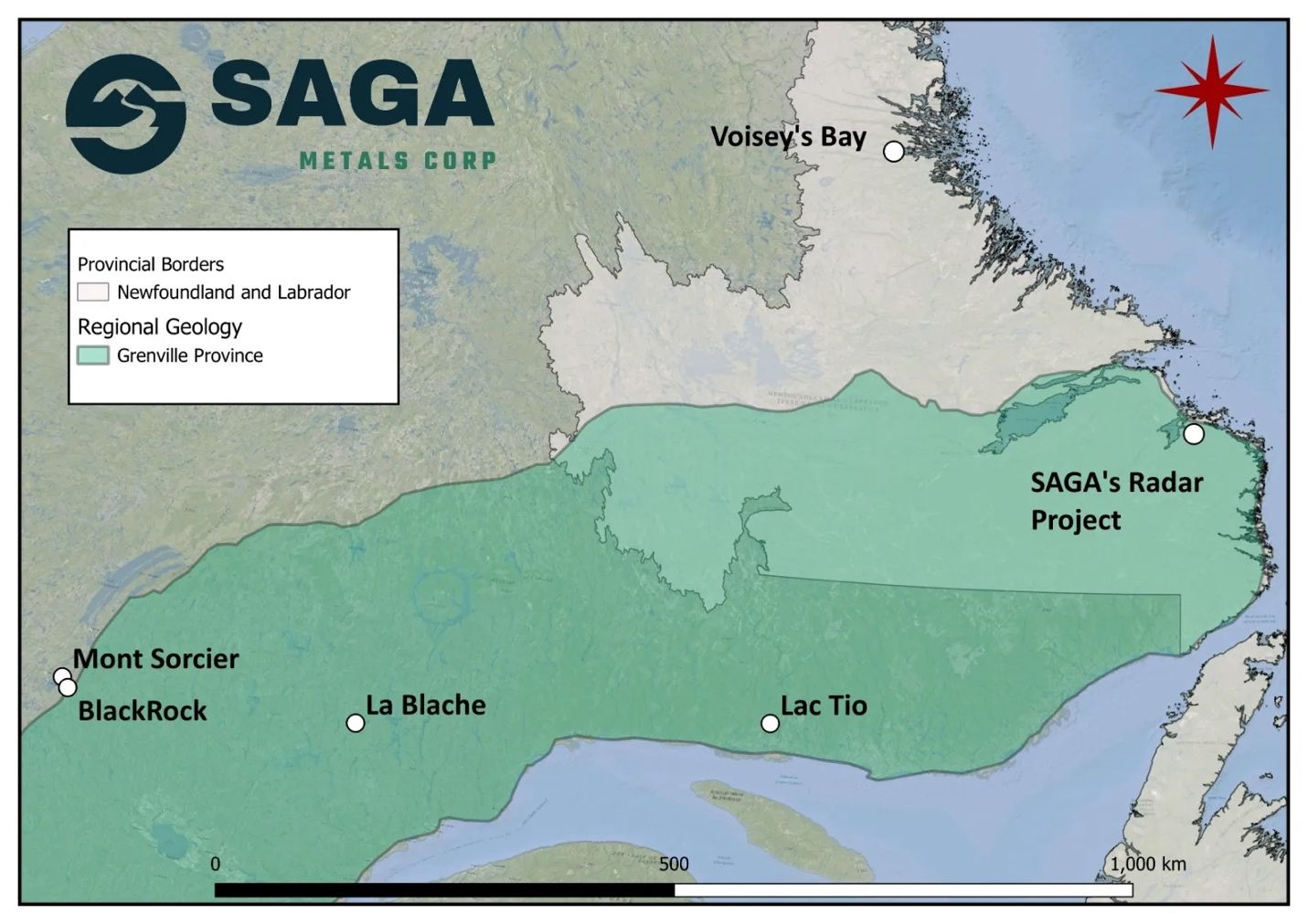
Just to the southwest lies Rio Tinto’s Lac Tio Project. Lac Tio has been a cornerstone of Rio Tinto’s titanium operations for more than 70 years. The site is a world-leading producer of high-grade titanium dioxide feedstock, with annual production of titanium slag exceeding 1 million metric tonnes.
Notably, Saga Metals (OTCQB: SAGMF, TSX-V: SAGA) already has an established partnership with Rio Tinto through its lithium project (more on that below), raising the strategic relevance of Radar’s proximity to Lac Tio.
Further to the southwest sit three more advanced-stage titanium-vanadium projects: Temas Resources’ La Blache Project, Strategic Resources’ BlackRock Project, and Cerrado Gold’s Mont Sorcier Project.
Together, these deposits represent hundreds of millions of tonnes in inferred and indicated resources.
As they progress toward production, they’re helping to catalyze a broader transformation of the Grenville Province into a globally recognized titanium-vanadium production corridor.
Radar’s potential becomes even more compelling when viewed in the context of its neighbors. The project shares key geological characteristics with its peers but benefits from better infrastructure, cleaner mineralogy, and earlier community alignment.
It’s a rare opportunity to advance a discovery-stage asset in a region already preparing to supply the next generation of strategic metals.
Lithium, Uranium, and Strategic Partnerships
While Radar remains the flagship, Saga Metals is not a one-asset story.
The company also controls additional critical mineral assets that position it for long-term relevance as domestic mineral production accelerates.
Legacy Lithium Project
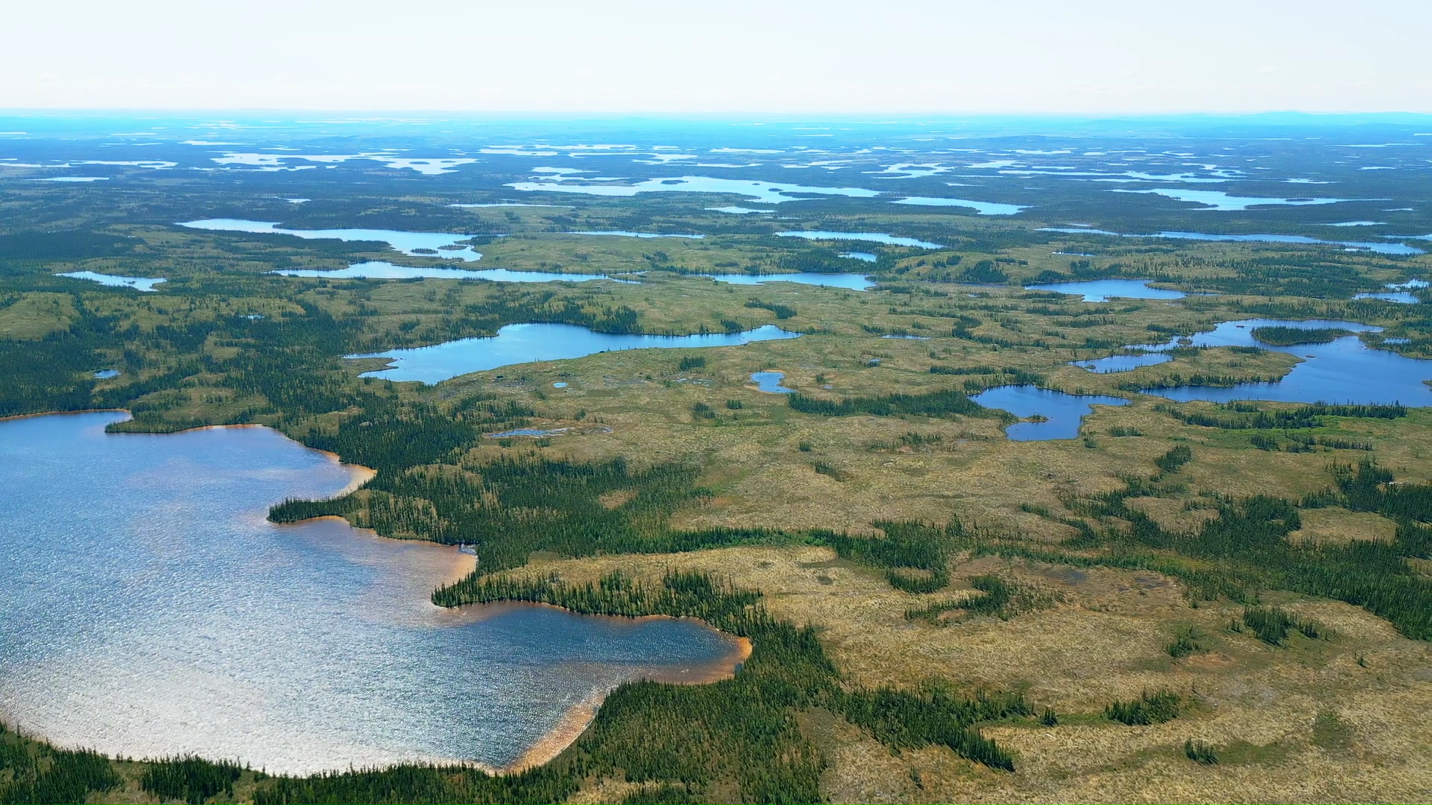
The Legacy Lithium Project covers more than 65,000 hectares in the heart of Quebec’s rapidly expanding James Bay lithium district.
The project is located along strike from major discoveries held by Winsome Resources, Azimut Exploration, and Loyal Lithium - and notably, is subject to a strategic partnership with Rio Tinto.
This partnership enhances Saga’s technical and financial capabilities and highlights institutional confidence in the project’s geological potential.
Legacy Lithium shares the same structural corridor as Rio Tinto’s own exploration efforts in the region, offering a compelling platform for further development.
The significance of this cannot be overstated. With the Radar project situated geologically near Rio Tinto’s Lac Tio titanium operations, the lithium partnership hints at deeper strategic alignment.
Double Mer Uranium Project
The Double Mer Project covers 25,600 hectares and sits close to major uranium discoveries held by Paladin Energy and Atha Energy. Recent exploration suggests Double Mer could host a large-scale uranium system. Saga has mapped an 18-kilometer uranium trend with three key targets. Surface samples returned grades up to 0.428%, along with strong radiometric readings reaching 27,000 cps.
Field teams have confirmed a robust mineralized system with multiple styles of uranium enrichment, and petrographic analysis points to strong geological consistency across the project.
Double Mer is now fully permitted and drill-ready, supported by Saga’s upgraded, year-round 10-person winterized camp, refurbished in 2025.
With demand for uranium rising in step with AI-driven power consumption and renewed nuclear adoption across the West, Saga’s presence in this space provides additional upside.
8 Reasons to Add Saga Metals (OTCQB: SAGMF, TSX-V: SAGA) To Your Watchlist
1. Lithium Partnership with Rio TintoSaga’s Legacy Lithium Project is already under partnership with Rio Tinto Exploration Canada (RTEC). As part of the agreement, Rio Tinto Exploration Canada (RTEC) has the option to acquire an initial 51% interest in Saga's Legacy Lithium Project over four years. Should RTEC earn the initial interest, they have a further option to increase their stake to 75%. RTEC will operate the project during these option periods, with a joint technical committee overseeing exploration. This collaboration provides Saga Metals with resources and expertise while allowing them to focus on other projects. Total financial commitment to earn 75% C$44.4 million.
2. Magnetometer Readings That Maxed Out EquipmentDuring the 2025 field season, magnetometer readings exceeded 115,000 nanoteslas in the Trapper zone, surpassing instrument thresholds and confirming the presence of massive titanomagnetite bodies at surface.
3. Near-Term Catalysts
A large-scale drill program is underway at the Trapper Zone as Saga advances toward a maiden Mineral Resource Estimate targeted for the second half of 2026. To date, more than 31 holes have been drilled across the Radar project, confirming oxide mineralization in every hole.
4. Fully Road-Accessible and Cost-EfficientUnlike many remote exploration projects, Radar is road-accessible, power-adjacent, and located just 10 km from the town of Cartwright’s deepwater port. Drilling costs are projected at just $300–$350 per meter, one of the lowest in the sector.
5. Globally Recognized Geological BeltRadar sits within the Grenville Geological Province, home to world-class titanium deposits like Rio Tinto’s Lac Tio. The same rock types, same structural settings - and still largely underexplored in Labrador.
6. Panzhihua-Scale PotentialSaga’s Radar Project shares striking geological similarities with China’s Panzhihua, the world’s largest VTM deposit. The company has already drilled thick, high-grade intercepts across just a fraction of its 24-kilometer oxide layering trend.
7. Optionality in a Nuclear WorldSaga’s Double Mer uranium project gives it exposure to the rapidly accelerating nuclear energy narrative, as governments look to power AI-era data infrastructure and decarbonize grids.
8. Titanium’s Moment Has ArrivedWith titanium demand rising across aerospace, drone warfare, and military supply chains—and the U.S. 91% reliant on foreign supply, making Saga’s Radar Project timely and strategic.
The Radar Project, defined by its Panzhihua-like scale, clean mineralogy, and robust infrastructure, has the potential to be one of the most promising VTM discoveries on the continent.
Early-stage drilling has tested less than 3% of the total oxide layering strike length and already yielded grades and intercepts that exceed expectations. The magnetic signatures, mineral continuity, and supportive jurisdiction all reinforce long-term potential.
But perhaps the most important element is diversification. With exposure to titanium, vanadium, iron, lithium, and uranium - and with a demonstrated ability to attract tier-one partners like Rio Tinto - Saga Metals (OTCQB: SAGMF, TSX-V: SAGA) offers leverage to some of the most important industrial shifts of this decade.
Visit the company’s website to learn more or sign up below to receive timely updates on news, milestones, and investor materials as they become available.