Hormuz Strife: Shipping Plummets, Oil Markets Roil
Strait of Hormuz's 90% shipping drop shakes global oil trade, affecting valuations and sector's future earnings.
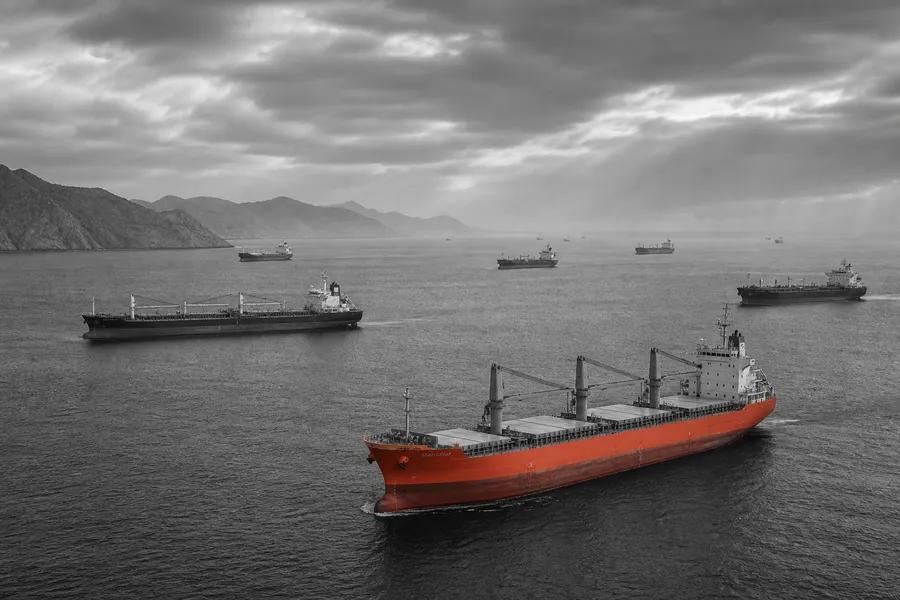
Iran's Persian Gulf Strait Authority flatly rejected U.S. assertions of dominance over the Strait of Hormuz on Wednesday, as vessel transits fell to near three-month lows - a disruption that continues to throttle global energy flows and rattle commodity markets.
With roughly 20% of the world's oil supply historically routed through Hormuz, the sustained blockade poses material risks to energy earnings, shipping-sector revenues, and inflation-sensitive portfolios exposed to crude benchmarks.
Key Takeaways
- Hormuz daily transits down ~90% from pre-war average of 130 ships.
- Iran insists strait stays closed until U.S. meets sweeping conditions.
- Peace talks remain stalled; Houthi attacks open a second maritime front.
Market Reaction & Context
Vessel transits through the Strait of Hormuz averaged roughly 13 ships per day on a five-day rolling basis as of Tuesday, August 12 - nearly the lowest reading since May 12, according to trade analytics platform Kpler 1. A single day saw only eight crossings, compared with the 130-to-140 ships that transited daily before the United States and Israel launched military operations against Iran on February 28 2.
That 90% collapse in throughput represents one of the most severe sustained disruptions to a single maritime chokepoint in modern history, dwarfing prior Houthi-driven slowdowns in the Red Sea. Oil prices have risen in response as investors price in prolonged supply friction 2.
Detailed Analysis
Iran's Persian Gulf Strait Authority said in a post on X that "claims and repeated posts by U.S. officials that the Strait of Hormuz is no longer blocked do not change the reality: the Strait of Hormuz remains blocked and will not be reopened until Iran's conditions are accepted." 1 The statement directly contradicted President Donald Trump's Truth Social post earlier the same day, in which he said "The U.S.A. has total control over the Strait of Hormuz. I THINK WE WILL KEEP IT!" 1
Iran's Supreme National Security Council laid out its conditions over the weekend: a full end to the U.S. naval blockade, comprehensive sanctions relief, American troop withdrawals, and war reparations 1. Washington has countered with its own reparations demand, leaving formal negotiations effectively gridlocked 1.
Independent analysts have pushed back on White House characterizations of the situation. Dennis Citrinowicz, a senior researcher at the Institute for National Security Studies, said on X:
"The United States does not control the Strait of Hormuz. Despite everything that has happened, Iran retains sufficient capabilities to disrupt maritime traffic through the strait." 2
U.S. Energy Secretary Chris Wright said Tuesday that the seven-day average for oil leaving Hormuz had climbed to nearly 9 million barrels per day, suggesting that upgraded overland pipelines were partially compensating for sea-route disruption. That figure was quickly disputed; analyst Brett Erickson of Obsidian Risk Advisors said on X there is "zero evidence that 9Mbpd is exiting the Strait of Hormuz per day." 2
Geopolitical Escalation & Second Front
The conflict has broadened beyond Hormuz. Yemen-based Houthis struck an Egyptian-owned cargo vessel in the Bab al-Mandab Strait on Tuesday, killing six people - the first fatalities from such an attack in the current conflict 2. A U.S. Navy helicopter also struck a Panama-flagged cargo vessel accused of violating the Iranian blockade, illustrating how enforcement actions by both sides continue to heighten transit risk 2.
A June Memorandum of Understanding between Washington and Tehran collapsed in mid-July, renewing hostilities and effectively wiping out weeks of diplomatic progress 2. Pakistan's deputy prime minister met with Iranian, Saudi, and Kuwaiti officials on August 10 in a bid to revive talks, while Iran separately pursued Oman-brokered discussions that exclude the United States 2.
Outlook
Mohammad Reza Naqdi, a senior advisor to the Islamic Revolutionary Guard Corps commander, told PBS in a rare interview that Iran's strategy centers on establishing deterrence through attrition. "We saw confusion and bewilderment in America. It became a war without a strategy. Every two or three days, they announced a new objective," Naqdi said, adding that "victory is on our side." 1
Analysts note that Trump faces increasing domestic pressure ahead of November midterm elections, and some view his "total control" messaging as an effort to frame the conflict favorably rather than reflect battlefield reality 2. Until both sides align on a framework - reparations, sanctions relief, and blockade terms remain unresolved - the near-term probability of a full resumption of Hormuz traffic appears low.
Conclusion
For investors, the Hormuz impasse represents a sustained rather than transient supply shock. Energy producers with Middle East exposure, global shipping operators, and any portfolio sensitive to crude-price inflation face continued headline risk until a verifiable reopening agreement takes hold. With peace talks stalled and a second maritime front now active in the Red Sea corridor, the timeline for normalization remains deeply uncertain.
Not investment advice. For informational purposes only.