Ford Shifts Lincoln Production to Cut China Tariffs
Ford moves Lincoln model production to the US, escaping 52.5% China tariffs, impacting valuation and sector dynamics.
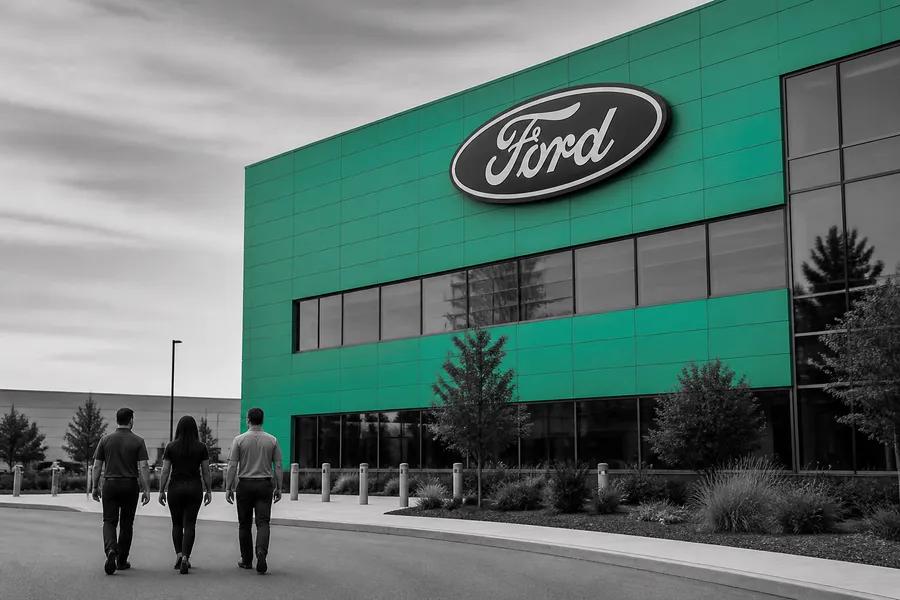
Ford Motor (F.N) said Wednesday it will shift production of select Lincoln models from China to the United States by 2030, a direct response to a 52.5% import tariff that has squeezed margins on its luxury lineup.
For investors, the move signals a structural cost realignment at Ford's Lincoln division - a segment where import duties have been eroding per-unit profitability on vehicles such as the Lincoln Nautilus, the automaker's primary China-sourced model.
Key Takeaways
- Ford to reshore Lincoln production from China to U.S. by 2030.
- Lincoln Nautilus imports currently face a 52.5% U.S. tariff.
- CEO Farley calls move difficult but strategically necessary.
Market Reaction & Context
The reshoring decision arrives as the broader U.S. auto sector grapples with elevated trade barriers on Chinese-made vehicles. Ford's domestic rivals General Motors and Stellantis have similarly been accelerating supply-chain localization strategies, though neither has faced the same Lincoln-specific tariff exposure that has made Ford's China import model increasingly untenable.
A 52.5% duty on gasoline-powered cars and EVs imported from China represents one of the steepest trade barriers in the current U.S. tariff framework, effectively pricing out any margin cushion on premium vehicles like the Nautilus. The shift in China's domestic auto market - where local brands have been gaining ground on foreign nameplates - adds further urgency to Ford's exit calculus, a dynamic detailed in recent analysis of how Chinese EV and traditional automakers are reshaping competitive positioning.
Detailed Analysis
The Lincoln Nautilus is the principal vehicle at the center of this production shift, having been manufactured in China for the North American market. At a 52.5% tariff rate, the landed cost of each unit imported from China becomes a significant drag on Ford's ability to price the vehicle competitively against German and Japanese luxury rivals who manufacture domestically or in tariff-advantaged locations 1.
Ford has not disclosed which U.S. facility will absorb Lincoln production, nor has it quantified the capital expenditure required for the transition. The four-year runway to 2030 suggests the company is working within existing plant-retooling cycles rather than greenfield construction, though no specific facility details have been confirmed.
The decision also carries broader strategic implications for Ford's joint-venture operations in China, where the company has historically used local manufacturing to serve both Chinese consumers and, in Lincoln's case, to export back to the United States. Reshoring the export-to-U.S. volumes removes one justification for maintaining that dual-purpose capacity.
Outlook & Management Comment
CEO Jim Farley framed the move as a calculated, policy-driven response rather than a reactive one.
"We made this decision as soon as the policy of the administration was set. We knew exactly what they wanted to do, and we knew exactly what it meant for Ford," Farley said in a joint interview with U.S. Commerce Secretary Howard Lutnick 1.
Commerce Secretary Lutnick offered an endorsement of the strategic logic, saying, "Ford's got an edge. Domestic manufacturing has an edge." The comment underscores that the reshoring is occurring with explicit policy backing, reducing the risk that future tariff adjustments could reverse the economics of the move mid-transition.
Conclusion
For Ford shareholders, the Lincoln reshoring plan removes a persistent tariff overhang on the luxury division but introduces near-term uncertainty around transition costs and production continuity. The 2030 timeline gives management flexibility, though analysts will likely press for facility specifics and capex guidance in upcoming earnings calls. The broader signal - that Ford views domestic manufacturing as a durable competitive advantage under the current policy regime - marks a meaningful strategic pivot for a brand that had used China as a cost-efficient production hub for its premium lineup.
Not investment advice. For informational purposes only.